TREND FORECAST
AI agents vs. human expertise: how sports retailers balance technology with tactile shopping
Executives from Amazon, Intersport and New Balance outline a future where AI supports, but does not replace, human expertise in sports retail, preserving the emotive, tactile store experience.
AI agents or humans? The future of sports retail, as told by Amazon, Intersport and New Balance
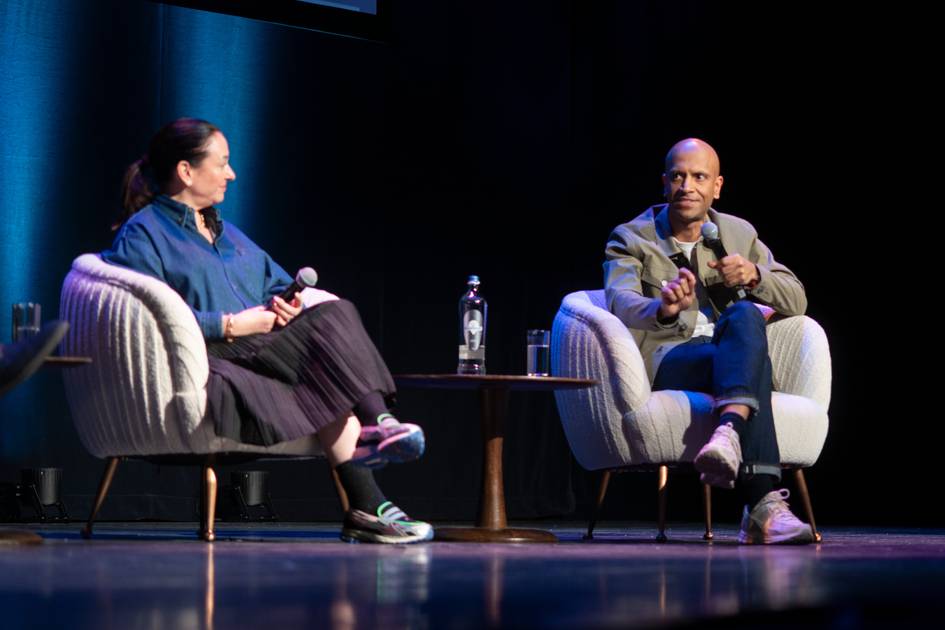
At the ISPO Summit in Amsterdam, leaders from Amazon Sports, Intersport and New Balance debated the role of artificial intelligence in sports retail, underscoring a pragmatic stance: AI will enhance consumer journeys, but will not supplant the irreplaceable value of human guidance, especially in high-emotion purchases like footwear and equipment.
Key voices—Avi Samtani (Amazon Sports Europe GM), Tom Foley (Intersport International Corporation CEO), and Ger Wright (New Balance VP sales EMEA)—agreed that the technology frontier will reshape shopping, yet physical stores, human staff, and brand partnerships remain central to trust and decision validation.
“Today, a lot of multi-purpose agents just don’t make the cut. I don’t think we’re there yet,” said Avi Samtani, emphasizing that specialized, brand-aligned agents outperform generic, internet-scraping bots for sports retail.
“Looking five years forward, I think we’re probably having a very different conversation.”
Intersport’s Foley framed retail as inherently human-centric: with more than 5,000 stores, the emotive nature of sport necessitates real conversations. Wright of New Balance echoed this, highlighting the desire to touch, try, and trust—nearly every time a consumer spends a substantial amount on footwear or equipment.
KEY TAKEAWAY
AI will handle repetitive, data-driven tasks while humans continue to guide emotionally charged decisions, especially in performance footwear and equipment. Brands can accelerate value by feeding rich data into AI systems to improve recommendations without eroding the human touch.
The conversation touched on the store’s evolving role. Wright described a layered experience where the physical visit remains essential for fit, feel, and motivation, while AI-assisted services can streamline discovery and recreation of personalized assortments. Foley added that stores in community hubs—near schools and clubs—will sustain a bricks-and-mortar fabric that online channels cannot replicate at scale.
On the consumer decision journey, Samtani argued that online timing is not merely checkout; it is the moment when a product remains in the consumer’s mind after delivery and during use. In other words, AI will influence the post-purchase experience as much as pre-purchase discovery, while human interaction anchors trust during high-stakes choices.
From an internal perspective, Wright predicted that AI could evolve into advanced forecasting and assortment planning, potentially removing some cognitive load from buyers. Samtani suggested a future with thousands of specialized agents, enabling cost savings that could be redirected toward deeper brand-consumer connections in store moments.
The ISPO context—an international trade fair for sporting goods and outdoor equipment—provided a stage for pragmatic experimentation: AI is not a wholesale replacement for human labor or the tactile, aspirational dimension of sport shopping. The leaders underscored a blended model: human expertise, rich brand data, and targeted AI assistance that augments the shopper’s journey without eroding the emotional resonance of sport.
For fashion operators, the implications are clear: if you sell performance footwear, apparel, or equipment, your strategy should harmonize AI-enabled discovery with human service at the critical moments of fit, motivation, and aspiration. The emphasis on community presence—stores as hubs—suggests that the physical store remains a powerful differentiator, particularly outside major urban centers where location and experience matter more to community members.
In practice, brands can begin with these concrete steps:
- Invest in brand-aligned AI agents: curate data and decision rules so recommendations reflect brand DNA and trusted performance metrics, not generic shopping bots.
- Preserve high-touch moments: train staff to intervene with empathy during boot fittings, gait analysis, and sport-specific consultations.
- Leverage data collaboration: share non-sensitive product and performance data with retail partners to improve AI accuracy while maintaining shopper trust.
- Develop community-driven store formats: host clinics, events, and local collaborations that reinforce the store as a data-to-experience hub.
- Pilot regional rollouts: test in urban and non-urban settings to validate the resilience of human-centric, AI-assisted experiences.
Looking ahead, the panorama for fashion retailers is not a binary choice between AI and humans. It is a spectrum where AI handles scalable, routine tasks and personalizes recommendations, while humans provide context, emotion, and experiential storytelling. In the sport category, where fit, feel, and motivation drive purchase, the blend appears not only practical but necessary for sustaining trust and conversion across channels.